How menu design psychology can lift car wash ticket size
An industry consultant breaks down the behavioral economics behind wash package layouts, from the decoy effect to trimming choices for faster decisions.
By The Car Wash News Staff
3 min read
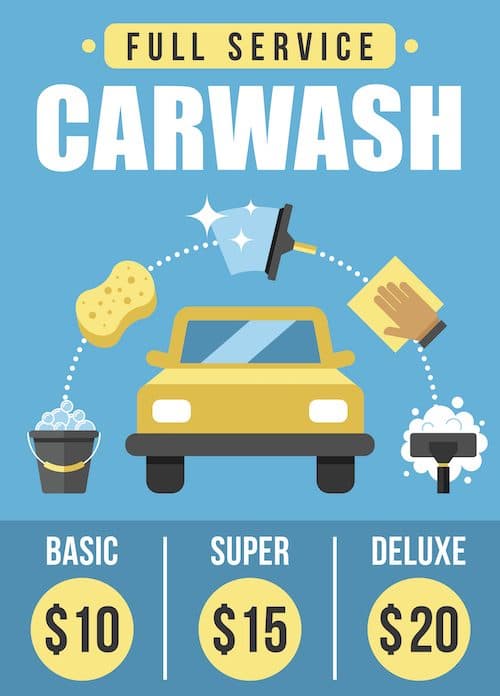
Car wash service menus have evolved far beyond the hand-painted wooden signs of the past, and the way operators lay out, name, and price their packages now draws on behavioral economics and profit optimization. That shift, driven by the express model and the rise of subscription washing, has turned menu design into a discipline in its own right, according to analysis from Auto Laundry News.
Written by industry consultant Robert Roman, the piece argues that a menu is more than a list of offerings. It is a tool for increasing average ticket size and conversion rate by controlling how customers read, compare, and choose while sitting in line.
The psychology behind the board
One of the most common tactics is the decoy effect. Roman offers the example of packages priced at $14, $18, and $20, where the $20 option makes the $18 package feel like a bargain even though the operator most wants to move the top wash. Customers, he notes, rarely pick the cheapest or most expensive option, instead defaulting to what feels like the safest smart choice.
Visual hierarchy matters just as much as price. Most people read a menu starting from the center, then move toward the upper right and the largest visual element. Operators are advised to anchor the premier package at the top, use large typography and contrasting colors, and make the target package prominent through size, brightness, and framing.
Roman also points to a trend toward fewer choices to reduce decision fatigue. Rather than long a la carte lists, the current approach is typically three tiers, a subscription option, and one or two add-ons. Whole-number pricing such as $20 and $30 is replacing the older .95 and .99 endings because it reads cleaner and faster.
Language is shifting too. Roman suggests the traditional "good, better, best" framing has grown stale, and that names like "express, deluxe, and ceramic" better match what consumers value now: speed, premium products, and modernism. He warns that customers understand words like wax, sealant, and ceramic, but not chemistry jargon such as nano-polymer hydrophobic protectant.
Memberships and throughput
Unlimited-wash plans lean on loss aversion and flat-rate bias, but the math depends heavily on geography. A $20 retail wash paired with a $30 unlimited plan rewards a customer who washes twice a month or more. Push the unlimited price to $40 and the value shifts. Roman notes that a Florida driver might go weeks without needing a wash, while in the Northeast a $20/$40 spread would look like a bargain year-round.
Speed is the operational goal. Most customers skim a menu for only a few seconds, comparing prices, best-value labels, and whether a wash includes wax, tire shine, or ceramic. Roman says the target is helping a customer decide within three to seven seconds without disrupting traffic flow. There is no single ideal menu, but the typical formula is a three-package layout with a ceramic upsell as the premium anchor, large type, minimal text, and illuminated columns that emphasize the best wash.
Why it matters for operators
Menu design is a low-cost lever that directly affects revenue per car. Operators can test a three-tier structure, reposition their target package for visual prominence, and simplify pricing to whole numbers without changing a single piece of equipment. Weather-resistant, sunlight-readable boards matter because unreadable POS screens on bright days are a common friction point. Reviewing package names and membership math against local wash frequency can also help convert more single washes into recurring subscribers.