A step-by-step system for cleaning vehicle carpets the professional way
Detailing expert Prentice St. Clair breaks down a three-part chemical process, hot water extraction, and steam cleaning for consistent interior results.
By The Car Wash News Staff
3 min read
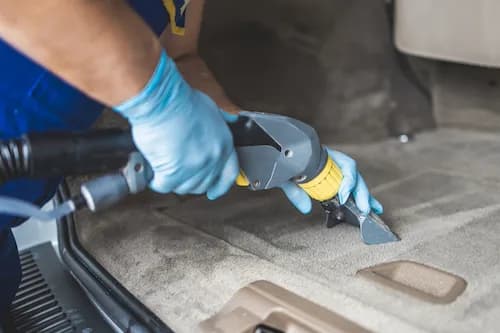
Carpet is one of the largest surface areas a technician has to clean inside a vehicle, and getting it right depends on following a disciplined process rather than rushing. In a detailed how-to piece published by Auto Laundry News, veteran detailer and International Detailing Association Hall of Fame member Prentice St. Clair lays out the steps professionals use to produce clean, dry carpets consistently.
St. Clair recommends removing floor mats and cleaning them first so they have time to dry, while saving the carpet still attached inside the vehicle for last to avoid dripping on or stepping on it during the rest of the interior detail. Thorough vacuuming, sometimes preceded by dry brushing to loosen embedded sand and grit, is the foundation that reduces the time and effort every later step requires.
The three-part chemical approach
The cleaning itself follows three stages: remove loose debris, loosen and emulsify remaining soil, then extract it. St. Clair pairs that with a three-chemical system. An enzyme spot and stain remover goes on first and dwells for several minutes before agitation. A low or no-foam alkaline cleaner follows to emulsify soil, with agitation from a stiff brush, a drill-mounted brush attachment, or a random-orbit polisher. After extraction, a peroxide-based post-treatment can sanitize, deodorize, and neutralize leftover chemistry.
For the rinse itself, St. Clair breaks with the instructions that ship with most extractors. Rather than filling the solution tank with cleaner, he uses clean water only, applying the cleaning chemicals directly to the carpet by hand and treating the extractor purely as a hot water rinsing device. The one exception he allows is a small amount of odor-neutralizing chemical, roughly one ounce per gallon, mixed into the rinse water.
Extraction, steam, and drying
Hot water extractors deliver water heated to between 180 and 220 degrees Fahrenheit, loosening dirt far better than cold water and helping carpets dry faster. St. Clair compares cold-water cleaning to scrubbing bacon fat from a pan without heat. Mobile operators tend to favor smaller three-gallon units, while high-volume shops opt for five-gallon or larger tanks, and large production facilities often use centralized extraction systems.
Dry vapor steam is the alternative. True steam runs around 325 degrees Fahrenheit, making it more effective on stubborn stains while leaving far less residual moisture. Its tradeoff is that it cleans surface fibers rather than the deep base of the carpet, which is why St. Clair favors it for express detailing. Many technicians keep both tools and switch based on the job, sometimes using steam to loosen stains and the extractor to rinse them out.
Drying matters as much as cleaning. Air movers can push up to 2,000 cubic feet per minute, and a vehicle's own climate control also works: run the fan at full, direct air to the floor vents, set heat to maximum, and turn on the air conditioner to pull moisture from the air. St. Clair also warns about wicking, where leftover soil migrates up damp fibers after cleaning, and recommends wiping the carpet with a dry towel immediately after rinsing.
Why it matters for operators
Interior detailing is a margin-rich add-on for wash operators expanding beyond exterior-only service, and carpet cleaning is where inconsistent results and callbacks most often occur. A repeatable process, clear chemical roles, and proper drying protect both quality and labor time. The advice to run clean water in the extractor also cuts chemical costs and reduces residue that attracts new soil. Daily extractor maintenance, including emptying recovery tanks and never leaving water in the solution tank, prevents mold and odor problems that can undermine a shop's reputation.