Flex washes gain ground as express saturation squeezes margins
An industry analysis argues the flex model offers stronger long-term revenue diversification and exit value as express washes crowd key growth markets.
By The Car Wash News Staff
3 min read
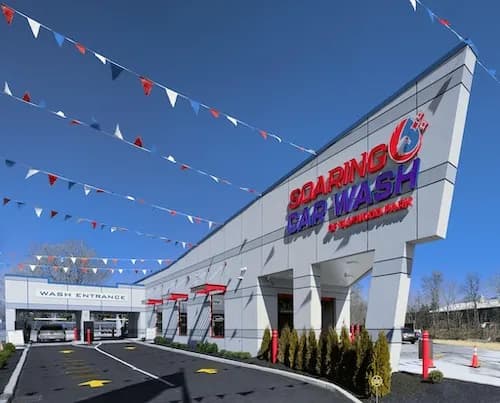
Operators weighing a new build face a defining question: construct a lean express exterior-only wash, or invest in a larger flex site that blends express speed with interior cleaning and detailing. Both models are profitable and scalable, but their cost structures and long-term financial trajectories diverge sharply, according to analysis from Auto Laundry News.
The piece, written by car wash architect Christopher Crawford, argues that while express has driven more than 90 percent of new development over the past 15 years, the flex model holds an edge in long-term resilience as express markets grow crowded.
The two models compared
Express washes rely on fast, fully automated exterior-only cleaning, a handful of pay terminals, free vacuums, and unlimited monthly memberships as the core revenue engine. Their advantages are concrete: build costs of roughly $2 million to $3.5 million for building and site work, smaller footprints of 0.75 to 1.5 acres, lean staffing of 6 to 12 employees, and simple operations. Membership revenue creates predictable, subscription-style cash flow that investors favor.
The drawbacks center on a revenue ceiling. Average tickets run $10 to $25 per wash, and heavy reliance on membership volume leaves operators exposed as markets saturate. With lookalike express sites on many corners, price wars are compressing membership pricing and squeezing margins, the analysis notes.
The flex model layers full-service interior cleaning and detailing options onto the express experience without the full labor overhead of a traditional full-service wash. Crawford estimates flex sites can generate 25 to 40 percent additional revenue per vehicle through interior upsells, detailing packages, and premium membership tiers. Multiple revenue streams reduce dependence on any single pricing lever and offer genuine differentiation in saturated corridors.
The tradeoffs
Flex comes at a higher cost. Construction runs $3 million to $6 million for building and site work, with land needs of 1.5 to 2.5 acres that can limit site selection in dense markets. Staffing climbs to 12 to 20 employees, including dedicated full-service and detailing crews, raising exposure to wage inflation and turnover. Operational complexity increases with scheduling, quality control, and wait-time management, and marketing must communicate a more nuanced, tiered value proposition.
The analysis points to express saturation accelerating in major metros across Texas, Florida, Tennessee, and Georgia. In those conditions, flex operators can build tiered memberships, strengthen loyalty, and command higher EBITDA multiples at sale, factors that appeal to private equity buyers favoring diversified revenue models.
Why it matters for operators
The analysis stops short of declaring a universal winner, and that caution is the practical point. Market demographics, local competition, available capital, and exit horizon all shape the right call. Express still makes sense for operators who prioritize speed to market, lower capital outlay, and simplicity, particularly in markets not yet crowded.
For operators in saturated or soon-to-be saturated corridors, the message is that volume alone may no longer protect margins. Diversified revenue through interior and detailing services offers more levers to pull when a location underperforms, and a differentiated offer can reduce membership churn in a sea of identical express brands. The cost is real: more capital, more staff, and more management attention.
Before committing either way, run realistic financial modeling against your specific market and hold horizon. The flex premium only pays off if an operator can execute consistent interior quality and absorb the added labor complexity that tight labor markets make harder to manage.