How detailers tackle water spots, overspray, tar and other surface paint flaws
An industry trade column breaks down the chemicals and techniques for removing contamination that sits on top of a vehicle's paint without reaching the layers below.
By The Car Wash News Staff
3 min read
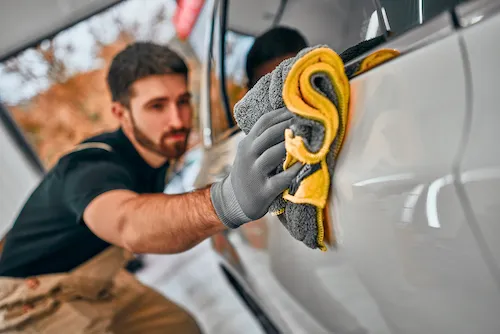
Operators who offer detailing or reconditioning services deal with two broad categories of paint trouble: problems inside the paint, such as oxidation and etching, and contamination that rests on top of the surface. A recent column by Prentice St. Clair, published by Auto Laundry News, focuses on the surface issues and the right chemical approach for each.
The core message is consistency across every contaminant type: reach for a product specifically formulated for automotive paint, let it do the work, and finish by restoring protection to any area you clean.
Common surface contaminants and fixes
Water spots are mineral deposits, usually calcium, left behind when tap water, errant lawn sprinklers, or rinse water dries on the paint. St. Clair notes they differ from etching, which cuts into the paint. Light spots often come off with a clay process, while harder deposits call for a water spot remover built around a mild acid. The column warns against substituting acids meant for other jobs, which can streak and create a new form of damage even when diluted.
Paint overspray appears as tiny speckles and typically responds to detailer's clay, though heavier buffing or damp sanding may be needed. On glass and trim, 91 percent isopropyl alcohol can remove it safely.
Tree sap will not come off with normal washing. St. Clair recommends a labeled tree sap remover over straight acetone or alcohol, because the blended products are more effective and gentler on surfaces. Towels used for sap are usually treated as disposable. A dry vapor steam machine, producing 325-degree steam aimed at the sap, is offered as an alternative that melts and loosens it for wiping.
Road tar, kicked up from fresh asphalt or sealcoating, mostly hits lower panels but can coat an entire vehicle. The method is to apply a dedicated tar remover, let it dwell several minutes, then wipe with a sacrificial towel.
Cement splatters are among the hardest to remove. The column suggests a citrus oil-based cleaner to penetrate and loosen the cement, followed by gentle scraping with a plastic spatula. Some scratching is almost unavoidable, so polishing afterward is expected.
Orange peel, the nubby texture left by the painting process, is treated as a special case. St. Clair says it can only be corrected through wet-sanding, also called color sanding.
Finishing and protecting
Because many of these removal methods can scratch or smudge paint, light polishing is often part of the job. Regardless of whether polishing is needed, St. Clair stresses that any area where contamination was removed should get a follow-up protection step, whether wax, sealant, or ceramic coating.
Why it matters for operators
For washes running detail bays or reconditioning operations, matching the chemical to the contaminant is both a quality and a liability issue. Using the wrong acid or defaulting to harsh solvents risks creating new paint damage that a customer will notice and that staff will have to correct for free. Standardizing on labeled, purpose-built products reduces that risk and makes outcomes more repeatable across technicians. The disposable-towel reality for sap and tar is also a real cost line that should be built into detailing pricing. Finally, treating protection as a mandatory last step, not an upsell afterthought, protects the work just completed and creates a natural opportunity to sell wax, sealant, or ceramic add-ons.