OSHA citation puts car wash safety gaps back in focus
A September 2026 enforcement action against a New Jersey car wash highlights common hazards around lockout/tagout, chemical handling, and noise exposure.
By The Car Wash News Staff
3 min read
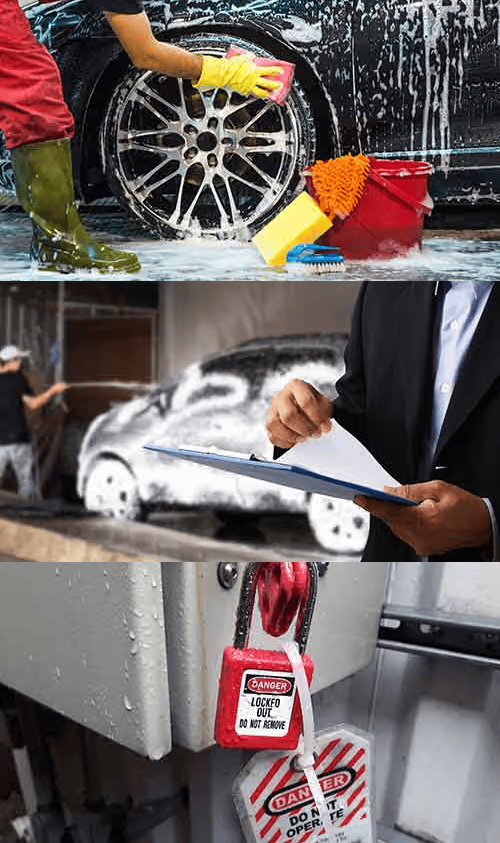
A single shift at a busy car wash can expose an employee to wet floors, moving conveyors, and freshly handled chemicals, and each of those tasks carries risks that are easy to miss when a tunnel is slammed. Recent federal enforcement is a reminder that regulators are watching whether written safety procedures actually match what happens on the floor.
In September 2026, OSHA cited a New Jersey car wash over lockout/tagout procedures, employee training, and noise monitoring, according to guidance published by Car Wash Business Center. The article, contributed by safety firm GMG EnviroSafe, frames the citation as a prompt for operators to audit their own facilities before an inspector does.
Where the risks hide
The advice starts with a physical walkthrough. Operators should look for standing water, loose hoses, and damaged grates that can cause falls, then check electrical equipment in wet areas, machine guards, and spots where chemicals could splash. Asking employees how they would report a hazard or respond to a spill can reveal where instructions fall short.
Conveyors, brushes, and rollers get special attention. Clearing a jam can expose a worker to sudden movement or stored energy, which is why lockout/tagout rules require authorized staff to isolate equipment, control hazardous energy, and verify that isolation before servicing. The piece stresses that a stop button alone is not enough protection.
Noise is another overlooked exposure. Blowers and dryers can be loud enough to require noise monitoring and a hearing conservation program, depending on what workers are actually exposed to during a shift.
Chemical and training requirements
Chemical safety carries its own compliance obligations. Under OSHA's Hazard Communication standard, employees must be trained when they begin work involving hazardous chemicals and again when new chemical hazards are introduced. That means showing staff how to read labels, pull up safety data sheets, and use the right protective equipment. Eyewash stations should be functional and easy to reach anywhere chemicals are used.
The guidance also emphasizes making training specific to each job and delivering it in a language employees understand. Having workers demonstrate what they learned, and keeping records of that training, helps operators spot gaps and follow up when tasks or hazards change.
Why it matters for operators
The New Jersey citation shows how the most common car wash hazards map directly onto the areas OSHA chose to enforce: equipment servicing, worker training, and noise. These are not exotic problems. They are the daily realities of running a tunnel, and they are also the items most likely to produce a fine or an injury claim when procedures exist on paper but not in practice.
The practical move is a self-audit before an inspector arrives. Walk the site, confirm lockout/tagout steps are being followed during jam clearing rather than assumed, check whether blower and dryer noise levels justify a hearing program, and verify that chemical training records are current for every employee who handles product. With many wash crews including workers whose first language is not English, offering training in the language employees understand is both a compliance safeguard and a way to make sure the instructions are actually absorbed. Closing the gap between written policy and floor-level behavior is the single most effective defense against both citations and injuries.