Texas wash owner pitches motorcycle wash system as add-on revenue
Pappy's Carwash operator Ken Eckenroth is distributing the Bike Spa automated motorcycle wash in the U.S. and has built a covered detailing bay for up to 20 bikes.
By The Car Wash News Staff
3 min read
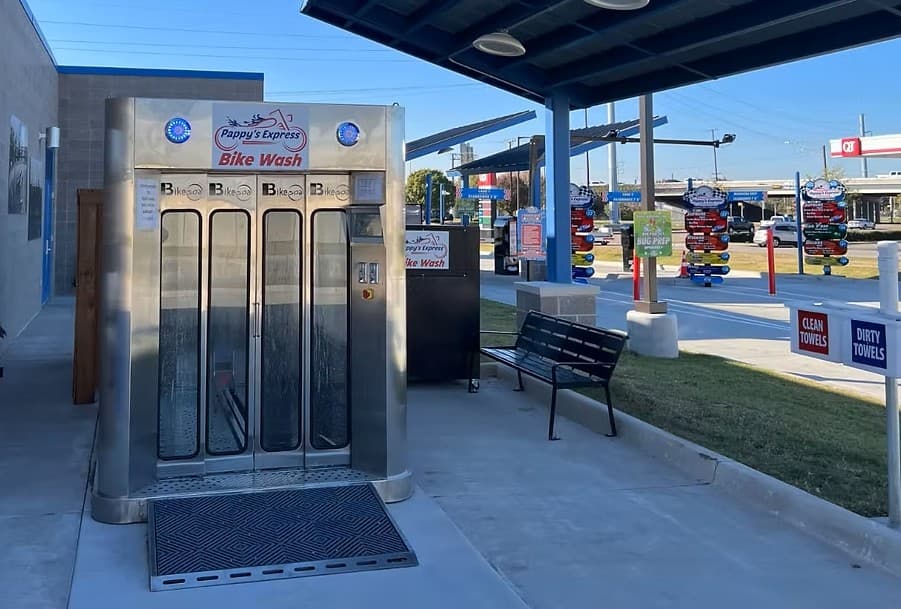
A Texas car wash owner is promoting an automated motorcycle wash system as a way for operators to open a new revenue stream. Ken Eckenroth, who owns Pappy's Carwash in Garland, Texas, now serves as the U.S. sales representative for Bike Spa, a system designed to wash and dry motorcycles, bikes, and scooters.
According to reporting from Car Wash Business Center, Eckenroth combined his family's motorcycle background with seven years in the car wash industry to become Bike Spa's U.S. distributor. He is positioning the equipment as a complement to existing wash operations rather than a replacement for them.
How the system works
Bike Spa uses 400 PSI water pressure that is intended to clean motorcycles without harming paint or stereo equipment, according to the report. The unit also includes built-in compressed air to reach tight areas around engines and windshields that towels cannot access. The company describes the product as a fully automated washing and drying system aimed at two-wheeled vehicles.
Eckenroth's newly built Garland location is set up to show how the equipment can fit into a broader service offering. It includes a covered detailing area that can hold up to 20 motorcycles and is stocked with free towels, chrome polish, and chain lubricant for customers. Bike Spa is scheduled to appear at the 2026 Sturgis Motorcycle Rally, one of the largest motorcycle gatherings in the country.
The pitch leans on the argument that the two-wheeled vehicle market continues to grow amid denser urban development and interest in fuel efficiency, creating demand for a fast and convenient way to clean bikes.
Why it matters for operators
Motorcycle washing sits outside the core business of most car wash sites, but the concept points to a broader question operators face: how to squeeze more revenue out of an existing footprint and customer base. An operator who is also selling the equipment is not a neutral source, so any claims about performance and returns deserve independent verification before capital is committed.
For operators weighing an add-on like this, the practical considerations are familiar. Motorcycle traffic is seasonal in most markets and concentrated in warmer months, so revenue projections should account for a shorter usage window than a standard tunnel or in-bay automatic sees. Space is another factor. A covered detailing bay for 20 bikes represents real square footage that could otherwise be used for vacuums, detail services, or vehicle stacking.
The more transferable lesson is the model itself. The Garland setup pairs an automated wash with a self-serve detailing area stocked with consumables, which is a way to keep customers on site longer and build loyalty within a specific niche. Operators in regions with large riding communities, or those near events and rally routes, may find a motorcycle offering differentiates them from nearby express washes.
Before adding any specialty equipment, operators should confirm local demand, model the payback period against realistic seasonal volume, and evaluate whether staff and site layout can support the service without slowing throughput for the core car wash business.