Editor makes the case for flex washes as express saturation looms
An Auto Laundry News column argues the flex model offers stronger long-term returns as the express market crowds and membership growth slows.
By The Car Wash News Staff
3 min read
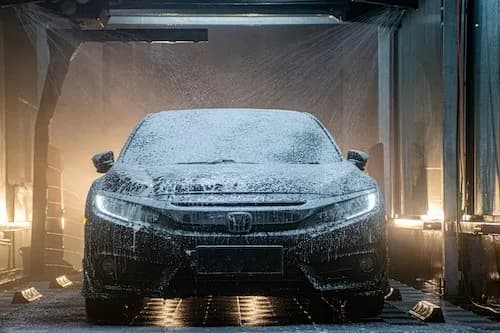
The express wash concept dominates the industry today, but a recent editorial argues that operators who layer in full-service style offerings may hold an advantage as the market matures. In a column for Auto Laundry News, editor Timothy Denman makes the case that the flex model, which blends express convenience with do-it-for-me interior work, could be the industry's next growth story.
Denman frames the discussion through his own habits as a customer. He uses a nearby express site for quick exterior washes but drives farther to a full-service location when the interior needs attention. The full-service visit costs more and takes three to four times longer, he notes, but he values the experience of leaving with a clean interior without doing the work himself. He adds that many people he speaks with in professional and personal settings share that preference.
Two models, two sets of tradeoffs
The column points to two pieces in the same issue that dig into the question. In an article titled "Express Versus Flex," Chris Crawford lays out the advantages and drawbacks of each approach and argues that the flex model delivers greater long-term financial benefits, potentially giving operators an edge over express-only sites.
In his "Finishing Line" column, Robert Roman raises a separate concern about the express segment. According to Denman's summary, Roman contends that the express market is becoming oversaturated and that too many locations could drag down returns for operators. Roman also argues that membership growth will eventually plateau and become less profitable, because operators will have to spend more on marketing to recruit new members and manage churn.
Together, the two arguments suggest the express boom may be approaching limits that push some operators to differentiate. Denman stops short of predicting a flex surge, writing only that time will tell. He does say that if his local express site added flex services, he would stop visiting the full-service location altogether.
Why it matters for operators
The express model is not going anywhere, and the column acknowledges its strength through rapid expansion in locations, memberships, and profits. But the editorial points to real pressure points that operators should weigh when planning their next investment or site.
Market saturation is the central warning. In crowded trade areas, adding another express tunnel may yield diminishing returns, and competing purely on speed and price can erode margins. The column suggests that interior-focused flex services represent one way to stand out and capture customers who want a clean car without the labor of self-service vacuums and wipe-downs.
The membership angle deserves attention too. If growth in new memberships slows and marketing costs climb to keep churn in check, the recurring revenue that underpins many express businesses becomes harder to defend. Operators relying heavily on unlimited plans should model what happens when acquisition costs rise and the member base levels off.
For owners evaluating expansion, the practical takeaway is to study local competition before committing to another express-only build. Adding flex capacity, whether through staffed interior service or add-on packages, could create a defensible position in markets where express sites are stacking up. The experience of a visibly cleaner interior, delivered quickly, is the kind of memorable result that can build loyalty beyond price.